Working with a smaller palette
Fewer finishes can make decisions easier. The useful question is where a material can continue, and where it needs to change.
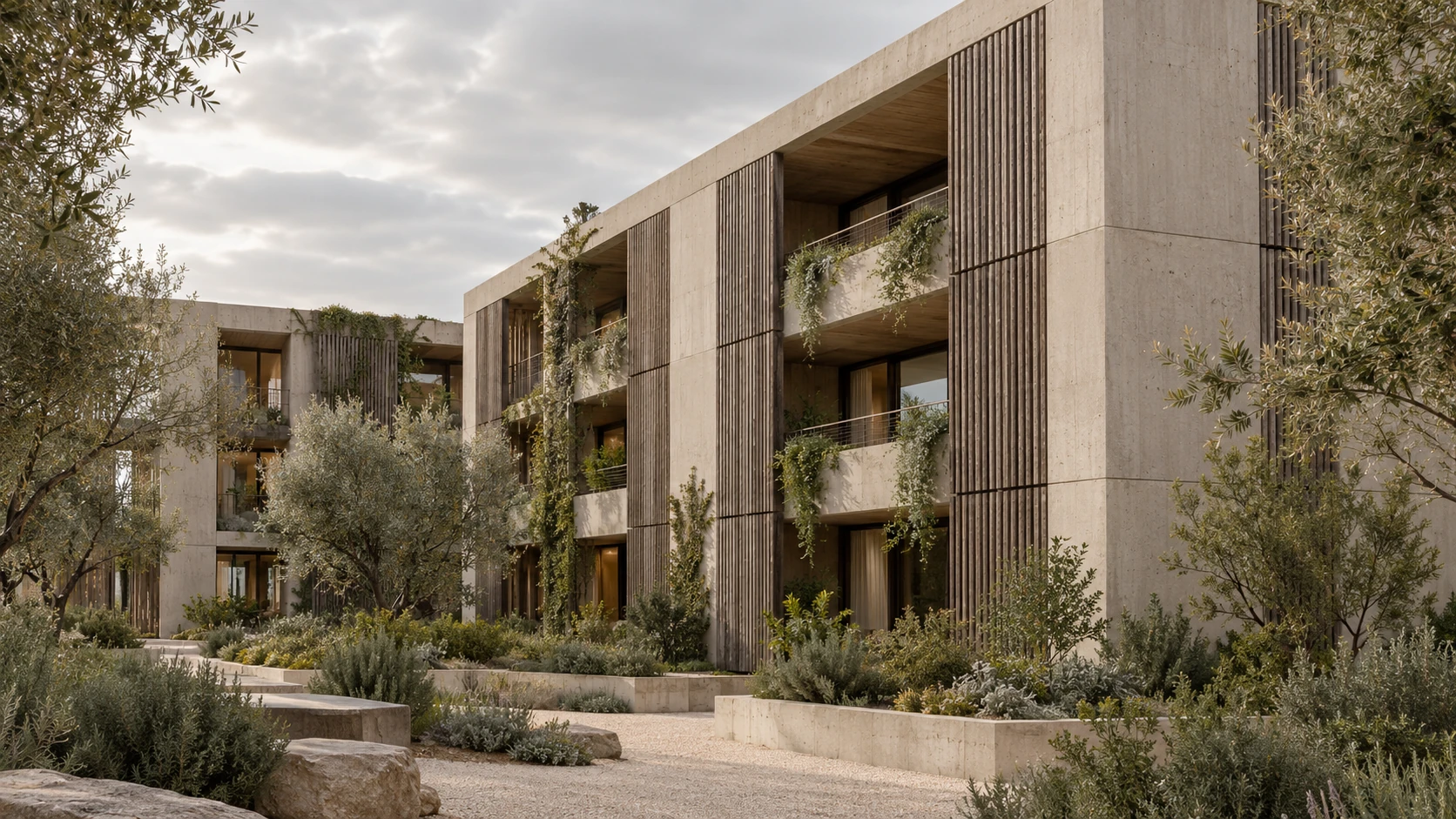
Let each material do more
Lay the floor, wall and joinery samples beside one another in the room where they will be used. Move them away from the window and look again. The white that looked neutral in a showroom may seem yellow beside the stone you have chosen. A photograph on a screen is a poor way to settle that relationship.
There is no ideal number of materials. Start with the uses they need to serve, then see where one choice can continue. The same timber might suit a cupboard and a wall lining. It may be the wrong choice beside a wet entrance. Consistency should not make a surface harder to clean or less suited to its job.
Pay attention to the meeting point
Where the finish changes, draw the joint. Different floor build-ups may need to meet at the same level. A door frame has a depth; a tile has an exposed edge. Decide whether a junction should align, overlap or leave a deliberate gap before it becomes a question for someone on site.
For an important junction, a small full-size mock-up can settle more than another rendering. View it at normal standing height, touch it and ask how it will be assembled. A simple palette leaves these details visible, which is a good reason to resolve them early.
VEYR Studio
Notes on planning, materials and the everyday use of buildings.