The value of shared ground
A square needs more than an empty centre. Its edges, seats and routes decide whether people have a reason to stay.
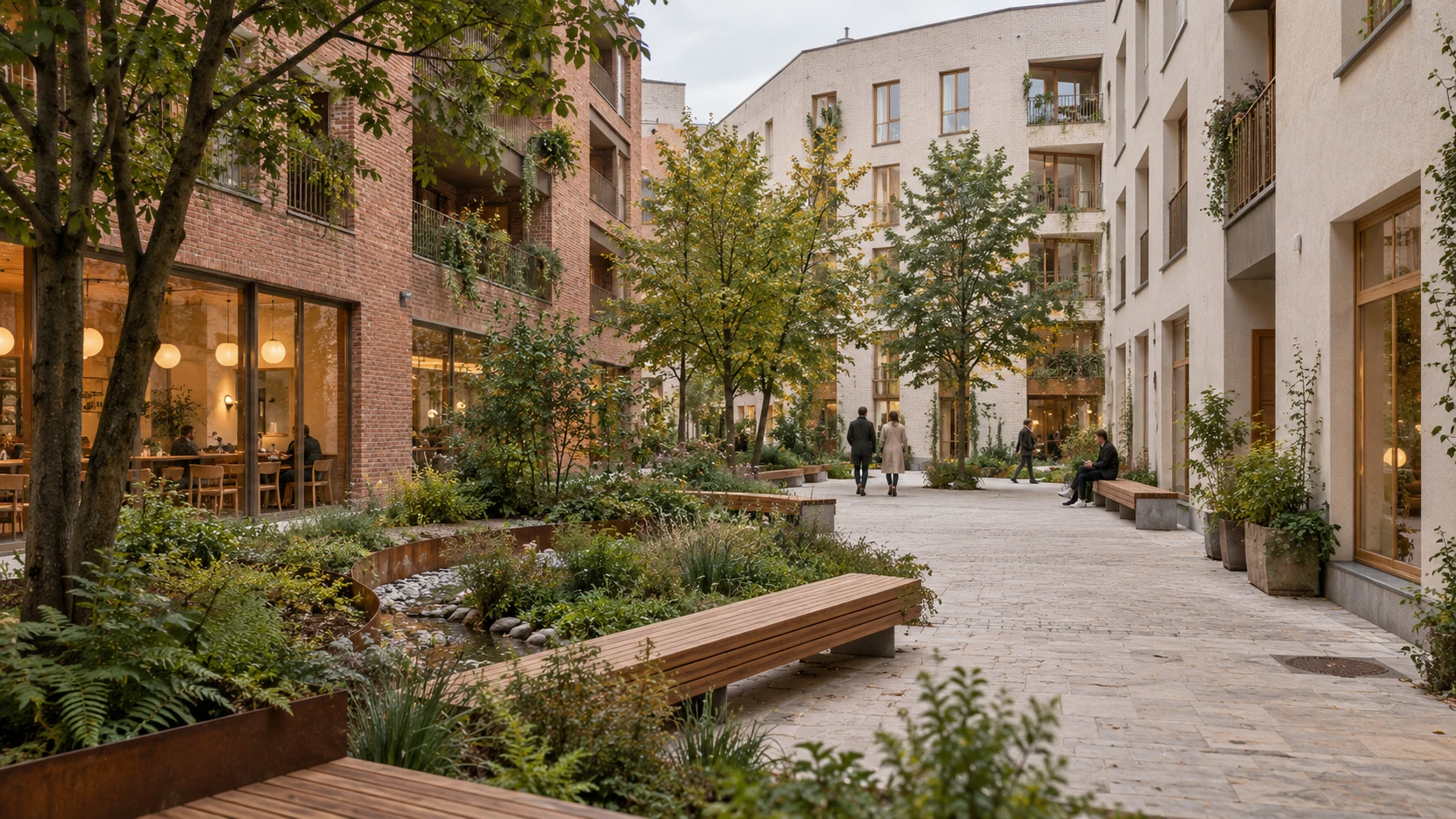
Start at the edge
Watch where people wait outside a busy building. They may stand under a narrow canopy, lean against a wall or sit on a step because there is nowhere else to go. Those choices reveal uses that an empty plan cannot show. A sheltered edge and a seat near the entrance can be as useful as the large open area beside them.
Follow the routes across the space, including the ones that cut a corner. Keep those paths clear when adding trees, tables or cycle parking. A person carrying shopping, pushing a buggy or using a mobility aid should not have to take a long detour to reach the same door.
Leave room for everyday use
Seating works differently in sun, shade and wind. Offer a choice where space allows, and leave room beside a bench for a wheelchair or a companion. Check the surface underfoot as well as the view. A pleasant place to sit should also be straightforward to reach.
Before adding a feature, ask who will look after it and how the space is used when there is no event. Can a delivery reach the entrance? Where does rainwater go? What remains available after neighbouring businesses close? The answers help a shared space serve an ordinary weekday, not just an opening photograph.
VEYR Studio
Notes on planning, materials and the everyday use of buildings.